Contact
0048 601 429 139
beata@proecoleaders.com

When I create artwork on paper or fine-art cotton rag, it remains an exterior object – a piece to be framed, mounted on a gallery wall, or observed from a distance. But what happens when the artwork leaves the paper and transfers directly onto human skin?
The Art of Creation (創造の芸術) was born at the intersection of classical drawing, Promethean mythology, and technological acceleration. Exploring it as a tattoo concept transforms the piece from an object you observe into a living, wearable canvas.
The core graphic of Art of Creation is a wireframe study of a male torso, drawn with double contour lines and pencil cross-hatching. Translating this artwork onto the body creates a meta-anatomical dialogue—drawing a torso over a human torso.
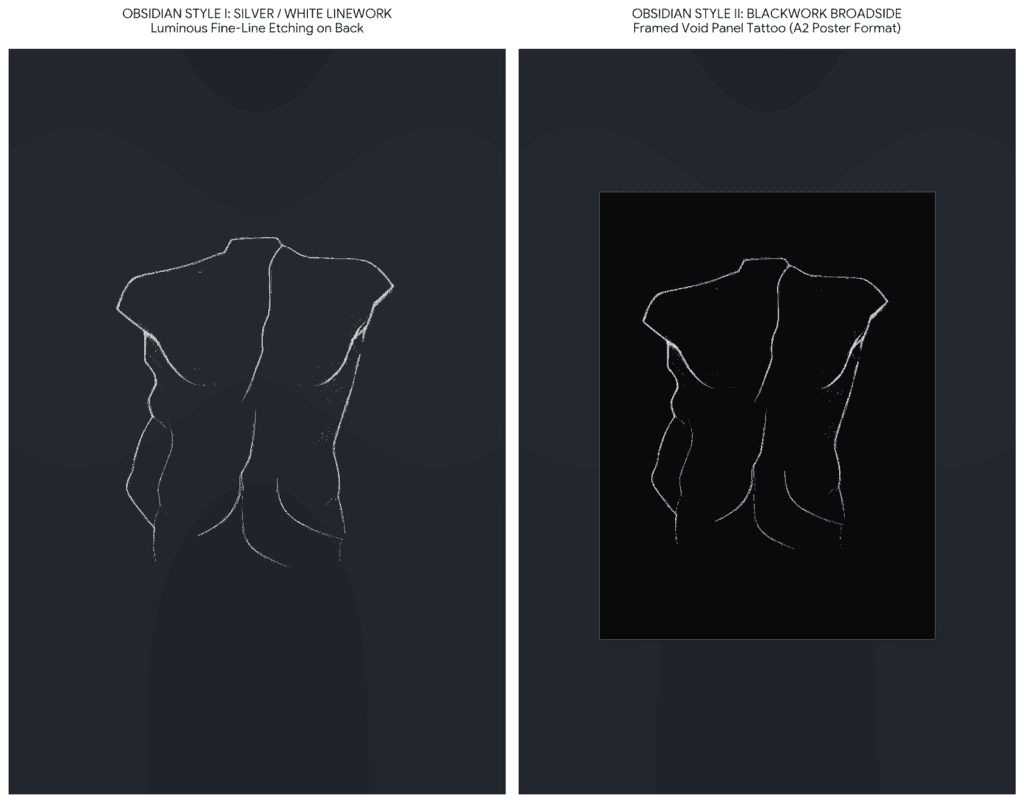
Alabaster vs. Obsidian: Two Inking Philosophies
Translating fine-art prints to tattoo ink offers two distinct visual directions, mirroring our print editions:
3RL/5RL) and diluted charcoal washes (30% K) to reproduce delicate graphite hatching directly on skin. It feels like an authentic Renaissance sketch or botanical etching.The Poem Beneath the Surface
The poetry tied to this piece examines our desire to forge, reshape, and breathe fire into new entities—whether in marble, words, or artificial intelligence:
我が手もて、汝を造り変えん
ミケランジェロの如くに
…
我が言葉もて、汝を築き上げん
プロメテウスの如くに
汝に生命を授けん
汝に焔を授けん
我が神よ
“I will reshape you with my hands
Looking for a better form for your flourishing mind
Like Michelangelo
I will create you with my hands
Searching for an infinity for your awaking soul
Like Marquez
I will build you with my words
Striving for company for your fragile body
Like Prometheus
I will give you life
I will give you fire
My God”
Wearing this artwork makes the Promethean cycle deeply personal. We are not just creators observing technology or art from afar – our bodies themselves are the clay, the water, and the vessel holding the fire.
When placed across a female back, the Art of Creation drawing creates an intimate, elegant contrast between the soft curves of the body and the sharp, architectural pencil hatching of the artwork.
30% K) applied with single-needle precision (1RL/3RL) mimics delicate graphite etching or classical Renaissance sketchbook studies.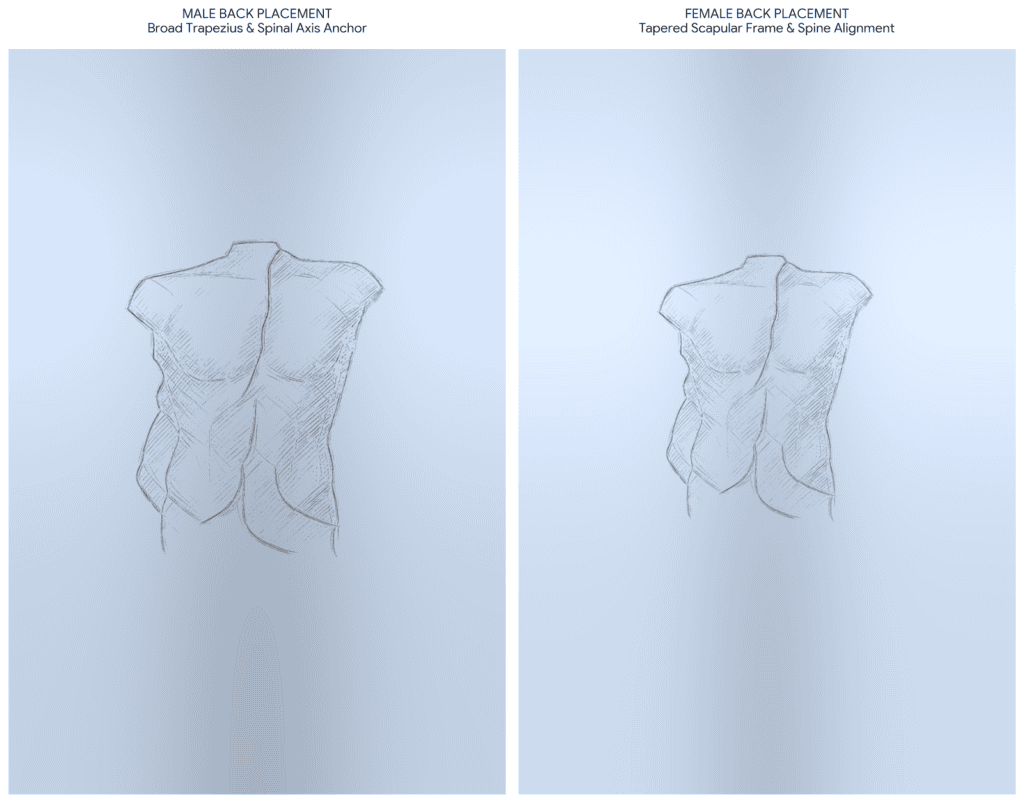
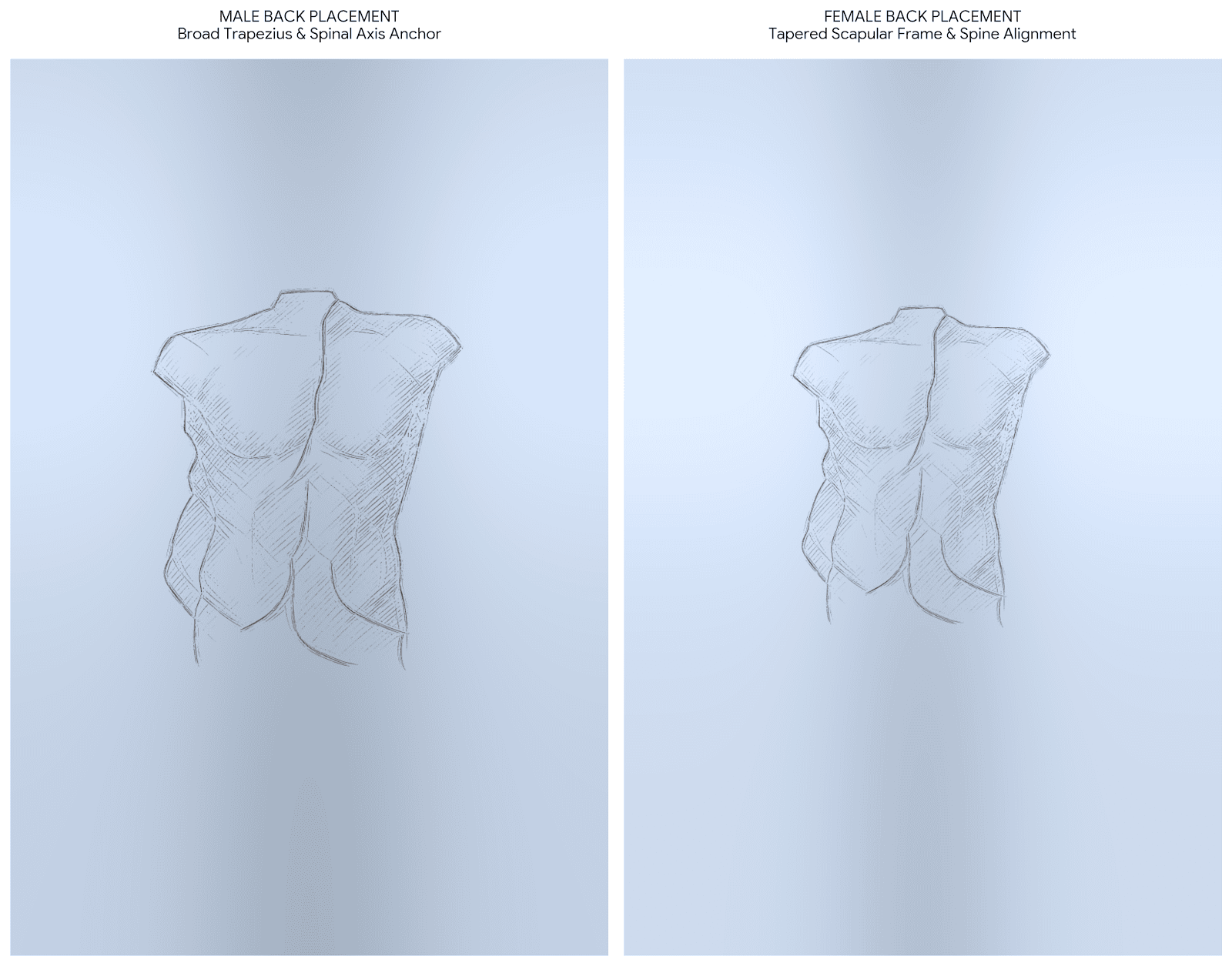
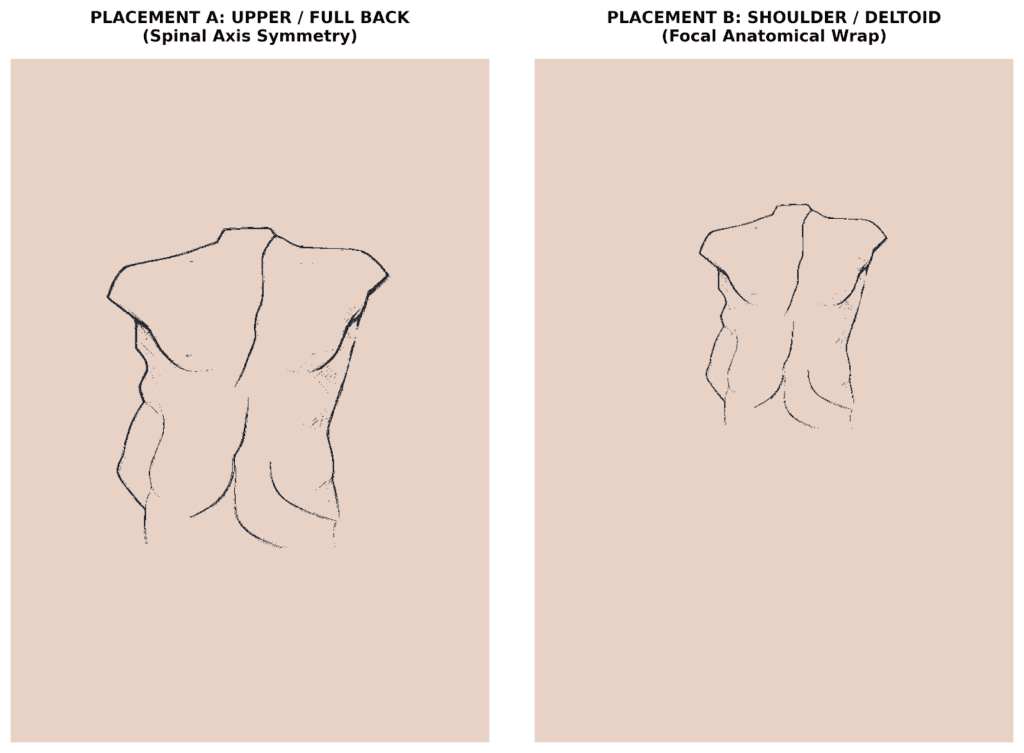
Placing the Art of Creation anatomical wireframe centrally on the upper back creates a meta-anatomical mirror effect for both male and female bodies. The primary distinction lies in scale, shoulder proportion, and how the linework interacts with muscle contours.
| Design Element | Male Back Placement | Female Back Placement |
| Recommended Scale | Large (22 – 30 vertical height) | Medium / Delicate (16 – 22 vertical height) |
| Primary Anchor Point | T1–T12 Spinal Axis + Trapezius | T1–T8 Spinal Axis + Scapular Center |
| Contour Interaction | The wider shoulder span holds the full width of the drawn torso, anchoring firmly into broad back muscles. | The drawn contour lines taper gently between the shoulder blades, maintaining generous negative space. |
| Linework Thickness | 5RL / 7RL outline with weighted shading | 3RL / 5RL fine-line with light grey wash (30% K) |
| Visual Impression | Architectural, grounded, and monumental. | Sculptural, elegant, and ethereal. |
1RL) for the internal cross-hatching to maintain the soft graphite pencil quality rather than heavy solid shading.Explore the complete 'Art of Creation’ (創造の芸術) broadside collection and archival A2 prints at poetry.mosor.pl.
