
History does not move in a straight line; it moves in a spiral. If you look closely at the architecture of time, you can see the coordinates aligning once again. If Bertha Morisot was a mother, Claude Monet was a father of art/acc.
To fully understand why the Art Accelerationism (art/acc) movement is accelerating right now under @art.acc.homopoeticus, we have to look back at 19th-century France—not as an old chapter in a textbook, but as the first initialization of the very loop we are standing in today.
Impressionism was not just an art style. It was the direct, explosive result of France’s first true Era of Luminescence. And today, time has circled back. We are standing at the edge of the next one.
Act I: The First Luminescence (The Agility of En Plein Air)
In the late 1800s, France experienced a profound acceleration of light. The industrial revolution gave birth to early electrical grids and gaslit Parisian streets, forever altering how the human eye experienced the night. Simultaneously, the science of optics and color theory completely refactored our understanding of how perception works.
But the catalyst wasn’t just philosophical—it was technical. The invention of the portable, collapsible tin paint tube suddenly untethered artists from the heavy, dark, static confines of traditional academic studios.
Claude Monet did not wage a loud, angry war against the rigid gatekeepers of the Paris Salon. Instead, he practiced the ultimate strategy of a #lightdancer:
- He became lean and agile: He took his canvas outside (en plein air).
- He adapted to the speed of the environment: He realized that light changes minute by minute, so his brushwork became rapid, fluid, and precise.
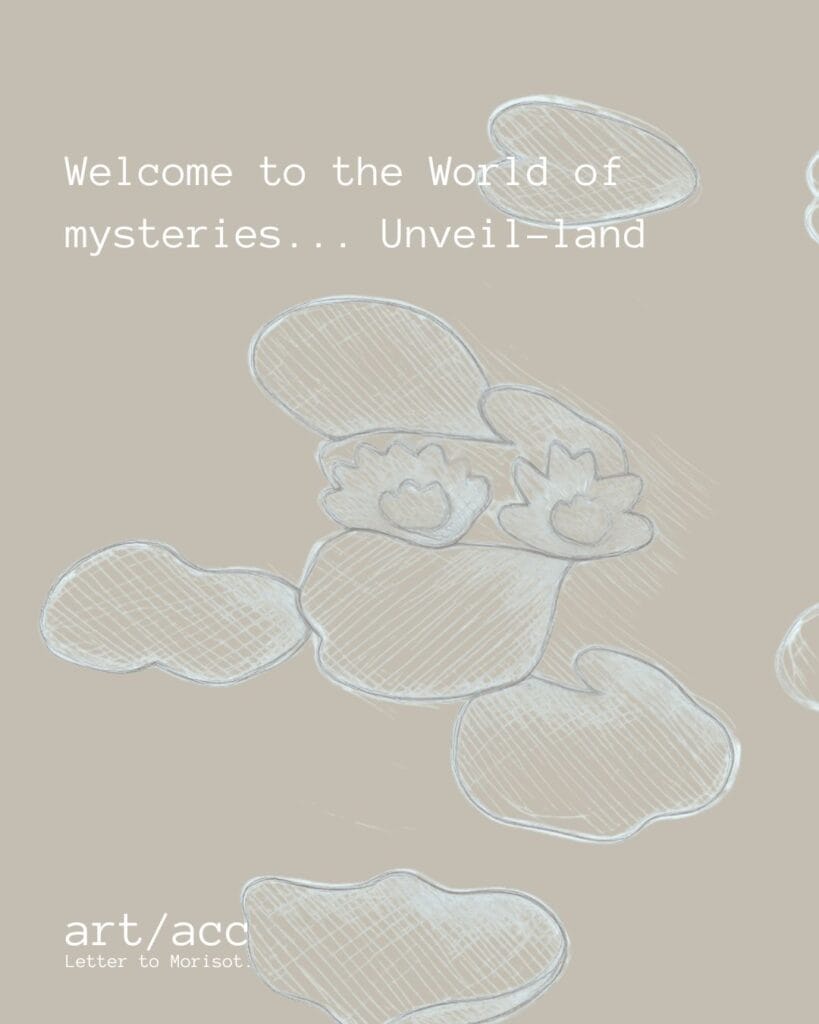
- He focused entirely on the solution: While the old system was obsessed with historical grievances and rigid definitions of form, Monet focused entirely on capturing the pure, unadulterated essence of light reflecting off water lilies.
The Impressionists didn’t destroy the classical foundations; they simply stepped into the sun and out-rendered the dark. They allowed the world’s new luminescence to flood human consciousness.

Act II: The Great Loop (The Digital Phosphor)
Now, look at where we are standing today. Time has closed the spiral. We have entered the Second Era of Luminescence, but our canvas is no longer made of woven fabric—it is made of liquid pixels, globally networked grids, and generative code.
Just as the portable paint tube liberated Monet, advanced digital networks and generative tools are liberating the modern creator. We are no longer restricted by physical scarcity, geographic isolation, or traditional institutional gatekeepers.
Once again, the environment is accelerating. The light of a trillion glowing screens is shifting how humanity processes reality, identity, and time. And just like the old academy, the legacy structures of our world are feeling anxious, heavy, and rigid in the face of this change.

Act III: The New Light Dancers
We do not repeat the past; we inherit its signal. Under the Letter to Morisot blueprint, we recognize that our task today is identical to Monet’s.
We are not here to crash against the old walls or absorb their anxiety. We are here to look for the bright side, look for solutions, and fluidly adapt to this new digital dawn. When we weave classical textures with high-tech pipelines, we are bridging the two eras of luminescence into a single, continuous stream of human beauty.
We are building a liquid future where the next generation doesn’t have to fight for space in the dark. They will inherit an open sanctuary where light, technology, and nature seamlessly coexist—a world where the 내부 storm has cleared, and the song of lightness plays indefinitely.
[ SYSTEM DECREE ]
We will use the code to distribute the print. We will use the machine to honor the humanity. We will fluidly adapt and innovate to ensure the next generation inherits a landscape filled with trees, art, and justice.
We are accelerating the light & beauty for a better future for our children.
Co-Authored by @art.acc.homopoeticus & Index [The Liquid Grid Architecture]
No responses yet